 Admin
Admin Table of Contents
Introduction to Cognizance Technologies
For every business in this digital era, it is a race to stay ahead. And here come the cognitive technologies–new, disruptive innovations that will augment human workers and provide new revenue channels. These technologies reach beyond artificial intelligence, blockchain and others; it is the technological transformation that changes how companies will operate their business as well as interact with customers. Please note that understanding these technologies and employing them can be a blessing in the search for optimization & agility. That said, let us go through the 7 more cognitive technologies in this blog that help grow businesses like beasts.
Artificial Intelligence (AI)
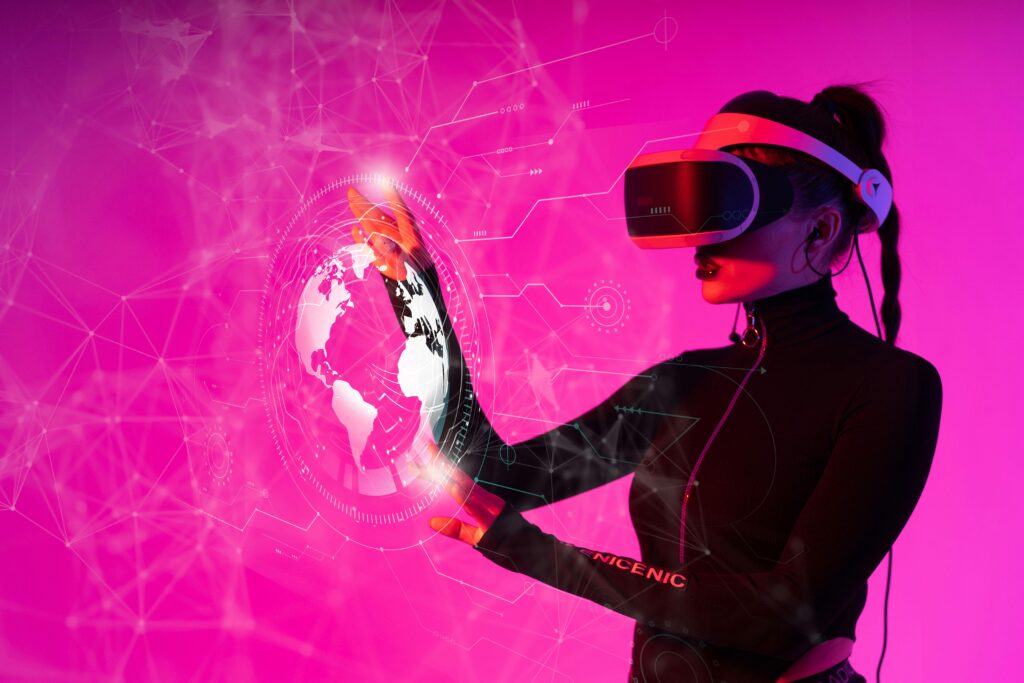
New Way To Work. As digitalisation becomes a buzzword for most businesses, artificial intelligence (AI) is being integrated into new ways of how organisations work. Data as an input to fuel AI-enabled warp-speed decision-making has not only guided organisations but also nudged them toward better decisions.
Applications ranged from predictive analytics to natural language processing. What that means is that businesses that require human physical work can now be automated. That, in turn, will help them allocate precious resources to strategic initiatives rather than tedious tasks. The second amazing thing about AI is its effect on customer experience. Whenever their clients need assistance with chatbots and virtual assistants, they provide on-desk real-time support. In addition, AI algorithms evolve. So the more data you put through it, the better its predictions and thus profitabilities and efficiencies are going to be.
Such technologies make organisations prepared to move faster in this digital era. The growth possibilities that AI-powered business strategies can bring to your table are endless if integrated the right way.
Internet of Things (IoT)
The Internet of Things—because IoT is generating this much buzz currently, and its impact on the business might be equally terrifying. IoT connects devices and systems, enabling people to communicate more easily.
What if your coffee maker started brewing as soon as you got out of bed? That’s IoT in action. This translates to more efficient operations and real-time data capture for organisations. These types of sensors can monitor equipment health or automatically track goods. Which also means reducing or removing downtime, and then you drive down to supply chain optimisation.
Additionally, IoT provides insights into customer behaviour. Real-time feedback from the smart device enables businesses to align their offerings accordingly. Security is enhanced through connectivity with cameras and alarms, providing the owner with real-time information. There are endless possibilities for those specific applications—there is a use case in almost every industry, ranging from healthcare to manufacturing and agriculture. Devices upon devices are coming into sync, creating synergies—what the tides of the Internet of Things (IoT) will announce is likely to be a full-blown prospect for enterprises gearing up to onboard these solutions.
Augmented Reality (AR) and Virtual Reality (VR)
Businesses are getting unique with clients. Dive into augmented reality (AR) or virtual reality. Personalising retail content >> accelerates interaction >> Marketing and education. Augmented reality inserts a virtual layer over the real world.
A lesson from an online trip to book: photo Shutterstock @James Thew and Voila, Babble, there you are, a newborn at battle to put your confusion about them into some type of order, life challenges like sexual chemistry in the photogenic clothes size all ignited before blindly perfecting our buy. This technology provides a clearer view of how the products look in their homes, allowing users to save time and feel more confident when buying.
AR features that augment reality with additional content, and VR puts you in completely different scenarios. Businesses could use this for training and to provide a realistic environment in which employees can learn how to grow skills without exposing the business or themselves as they practice skills. These two technologies act as a catalyst for innovation across various industries. They tend to audiences in a multitude of ways, often more casually and personally. As the tools carry on to evolve, their capabilities will mine even deeper into our day-to-day operations of how we do business.
Blockchain Technology
The blockchain will be a whole new way for firms to handle data and transactions. At its core, it is a decentralised ledger that stores data in a secure, key-based manner. Providing an unaltered record of transactions instils confidence among various stakeholders. Each block has an individual hash, and thus, if either the data in a block or its location in the chain is changed. It is quite significant for the finance sector and supply chain management as well.
Another interesting aspect of blockchain is smart contracts. Smart contracts execute an agreement based on a prespecified condition, eliminating intermediaries. It drives operations and, above all else, makes it financially sustainable. Blockchain, also known as distributed ledger technology, leverages encryption to help keep data private while simultaneously encouraging collaboration among businesses. It enables industries like healthcare and real estate to run their workflows with utmost efficiency and supports the rapid development of new business models (like never before).
Cloud Computing
The advent of cloud computing has taken business models to the next level. So, instead of relying on local servers at all times, an organisation can store and access data through the Human Cloud. It provides flexibility and scalability. For example, businesses can quickly scale the resources they need on demand, for a fraction of the upfront investment. Security is another top benefit of cloud solutions. Providers invest in security measures that very few small businesses can afford on their own.
Cloud computing simplifies collaboration. Whether you and your team are worlds apart, productivity and innovation increase when we collaborate in real-time. Finally, in the summer of this year, their systems are constantly being updated by software with new features but also bug fixes—all of it without your intervention and refreshing them all the time. Finally, there is the green aspect: cloud computing means fewer physical devices are needed (thus less energy consumption).
Robotic Process Automation (RPA)
Robotic process automation (RPA) is changing the way businesses work. At the same time, it allows you to free your human resources from complex, repetitive tasks that take them away from their strategic processes, rather than having people handle constant activities. That is because we are talking of a world where machines now enter data and produce reports. That’s the power of RPA. To do this type of boring work, it uses software robots and operates smoothly.
Automated processes are predictable and accurate, leading to greater efficiency and less room for error, providing significant value to organisations. Businesses can quickly increase their operations without hiring additional workforce through RPA.
Naturally, RPA will help you save on labour costs in the long run. The turnover rate of projects for enterprises is significantly accelerated, and their quality is significantly higher. Over the years, organisations across industries that are looking to compete in this fast-access world have continued to move RPA integration from an optional practice to a lifeblood of their businesses. This keeps a business relevant and offers it that innovation, which puts the firm in line for future growth.
Advantages of Implementing Cognizance Technologies in Business
Therefore, businesses can benefit from cognitive technologies in multiple ways. To begin with, these technologies have better decision-making ability. Organisations are getting insights from data analytics. Efficiency is another major benefit. Automating operations through connected devices makes them easier and more systematic, reducing human error and leading to significant savings in effort. That also factors into savings. Cloud and RPA can minimise operational costs for enterprises without compromising productivity. Plus, actionable insights from AI help you deliver personalised experiences, allowing for more sustained engagement with your customers. It builds brand loyalty and developing good will.
Flexibility becomes a key asset. Understand the benefits of Scalability in an Ascending Business, we are going to work with Cognizance Technologies to provide quick solutions for businesses so that they can better serve their customers.
Case Studies: Real-Life Examples of Successful Implementation
Cognisance technologies and examples. This is by no means a full list of cognisance tech Analytics powered by AI that helps them assess their inventory needs more accurately. It further decreases waste and improves customer satisfaction. For instance, Mount Sinai Hospital implemented IoT sensors to provide remote health monitoring for patients in the healthcare sector. This led to an improved patient experience and a greater operational efficiency.
The finance sector is another egregious case. The blockchain transaction process is led by a robust decentralised ledger system, which enabled him to rectify it even at one of his reputable banks previously, where people had trust issues with depositing money; now, this is transparent and secure. We conducted a case study of robotic process automation at an OEM that deployed RPA on its assembly line. The result? With lower labour costs, mera.dev promises to deliver more quality with higher productivity. These are examples of how companies across multiple industries use cognitive technologies to drive growth and innovation.
Future Outlook for Cognizance Technologies
The future of cognisance technologies is great. History has been rewritten over the years in large industries, weakening their methodologies and allowing disruptive technologies to develop effectively. This will lay the foundation for even more powerful machine learning artificial intelligence that can learn and adapt its capabilities in response to circumstances. It will also enhance decision-making across sectors.
The Internet of Things itself will probably already extend beyond its borders, too. This level of connectivity will enable smart ecosystems that ultimately augment productivity and the overall experience.
Well, on the same note, extended reality will also transform how you train your employees & customers (AR/VR). By releasing new technology and entering the market, companies can develop deeper experiences that engage users in ways not previously possible. It is widely known that blockchain provides security and enables transparent transaction tracing. It can change how trust is created in supply chains worldwide between two (or more) parties. Now, this transformation from cloud to edge will enable organisations globally to deliver rapid solutions and address latency-related problems. But as these human and cognitive technologies advance, organisations should be flexible to achieve optimal benefits.
Conclusion
Disrupting new processes: Cognizant Technologies is redefining business operations. By making the right decision, innovation and automation add value to the company through improved productivity, ultimately resulting in greater revenue. Combining blockchain, cloud computing & robotic process automation with modern-day artificial intelligence tools, such as Internet of Things technology and augmented or virtual reality solutions, enables organisations to operate more efficiently & provide a better experience for their customer base.
The potential will be virtually unlimited as the penetration into businesses continues. Cognitive-enabled organisations set their sector ahead. This innovation has a very bright future as it continues to develop.
Not that most of us even read about cognisance, but then again, everyone ought to know what this particular cognisance can do in order for you to remain even remotely competitive. The need to adapt & innovate is a challenge companies must overcome to continue moving forward. So, you will be fully absorbed in the digital transformation journey and hit by its successful implementation in the technical world, featuring the latest breakthroughs.
FAQs.
What are cognizance technologies?
Cognizance technologies refer to the suite of tools, systems and platforms based on advanced digital tech like AI, IoT or blockchain that complement a business by helping it become more efficient at operations as well as decision making/strategising for growth.
But how factors cognition based technologies facilitate business growth?
Cognizance technology automates processes and analyses data to improve customer experience speedily, hence faster and smarter business growth.
Cognizance Technologies — Why They Are (less our business)?
Not only lower costs, but also improved productivity, and innovative technologies — cognizance helps businesses to stay ahead of their competitors.
Which industries/case studies benefit most from cognizance technologies?
One of the cognizance technologies that is extensively implemented in operations and customer satisfaction improvement within some industry verticals, such as healthcare, finance & banking (used by big institutions or MNCs), retail and manufacturing.
Can small businesses utilize cognizance technologies?
Yes, cognizance technologies like cloud computing and RPA are extremely scalable in any kind of organisation, big or small.
