
Table of Contents
Introduction to handloom projects and their importance
It is not just craft; handloom weaving is a piece of art and history! As a way to let students express their creative side and become more aware of the environmental impact, a project on handloom can be both rewarding and entertaining. Not only will students feel more in tune with tradition and history, but they will also develop patience, creative problem-solving, and design-thinking skills.
Students can explore creative opportunities and produce results of significance with their vibrant threads; they can explore colours and textures in unique ways through handloom projects. Every student can develop their imagination through these wonderful crafts as they learn about their significance in our society today. Explore these marvellous project ideas to help students spark creativity and potential!
7 creative project ideas for students

These weaving projects may also be ideal for art students interested in trying out weaving and adding on another skill: designing custom tote bags and using them in daily life (by creating personalised woven fabric and sewing it into tote bags);
Home decor wall hanging pieces (art students will design their own pattern and colours); designed handwoven scarf to be used or hung on the wall; eco-friendly usage by creating bookmarks from fabric scraps using the hand-weaving method; adding colour (using tie-dyeing or batik); cushion cover weaving; and finally, ending this learning session with the mini exhibition of all woven works for students to share with classmates.
Benefits of working on handloom projects
The many rewards of the project on handloom. To begin, handloom weaving allows students to explore their creative side and experiment with artistic choices. Colours, patterns and textures can be manipulated and used in original ways. Secondly, fine motor skills are also improved through handloom weaving. Fine weaving processes require an extreme amount of care and precision. This manual ability cannot be achieved in the same way from another experience. Using a handloom also introduces students to cultural history.
Handloom products have rich traditions and their own individual stories of heritage which would broaden students’ knowledge of history. Working with handlooms in class also teaches students teamwork and communication. Students would learn to exchange information, ideas, and techniques with one another, whether they are working individually or in a group. Working with handlooms in terms of projects would teach students about patience and perseverance. It takes time for students to master handloom skills, yet it is well worth it when a job is completed.
Step-by-step guide for creating a handloom project
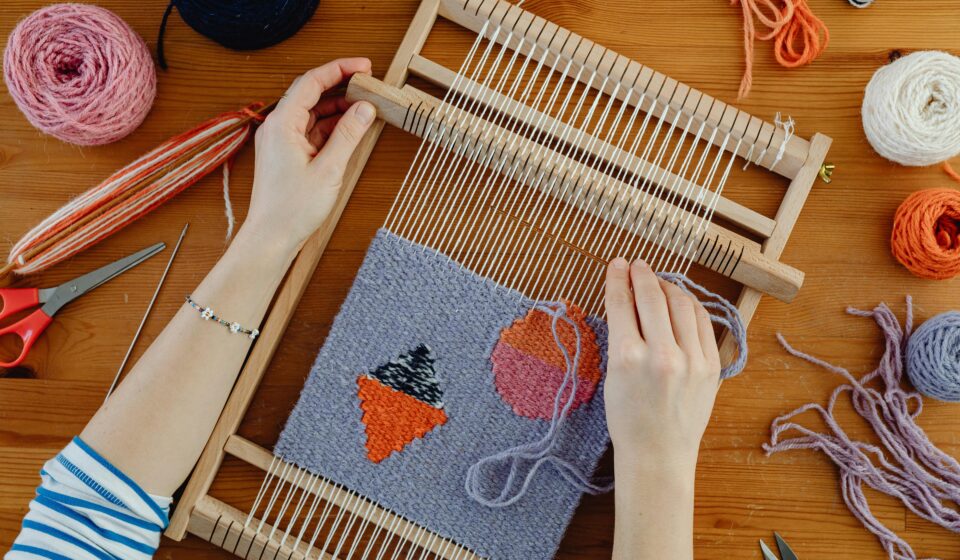
You can have great fun with a project on handloom! First plan what you are going to make. Think about what kind of design and colours you would like to use and the type of fabric. Once you have designed what you would like to make, you should gather all your equipment. You should get various colours of thread, a beginner’s loom, a pair of scissors and a tape measure. Follow the instructions to assemble your loom.
The loom should not move while you are weaving and should be safely secured to your work table or any other convenient surface. You should then start warping onto your loom. This is basically putting the thread around your loom, and it is on this that your design will be based.
Now, the weaving begins. Weave over and under with alternating colors of thread and you can build your designs with incredible ease. Always check the tension as you weave. This will ensure a quality finished piece. Once you have reached your required length or completed your pattern, it’s time to take it off the loom and secure your ends.
Resources and materials needed for each project idea
To start off your project on handloom, collecting your supplies will be crucial. Each design will have its own list that can promote artistic vision and creation. When making a traditional stole or scarf, you will require silk or cotton yarn, a loom (either homemade or bought), and a pair of scissors. A tape measure should be present if size accuracy is desired. Macramé cord with bright threads could be used to create some textural elements within a tapestry, and wooden dowels could be used to support each tapestry as it is being made.
To sew bags made from handwoven cloth, you will need strong thread, a sewing machine, or a needle and pins to piece the pieces together. A fabric choice will be needed that complements the design concept. Finally, if you will need dyes for your textile work, then it will be important to have natural plant dyes at your disposal. These resources can not only build upon craftsmanship but also encourage imagination in the fiber being constructed.
How these projects can help students develop skills and knowledge
Students are given opportunities through Handloom activities to release their imagination on various objects. Students have been required to imagine designs, then create these images on physical objects and also develop several possible solutions for problems that can and will arise while developing an idea or work in progress. Through thread, weaving structure, and tools, handloom activities are conducive to developing students’ fine motor skills. Fine motor skills improve over time with handloom activities and involve the use of fine muscles—movements to maneuver materials and implement designs successfully. By participating in this project, students will gain a deeper awareness and appreciation of heritage.
The history of handloom work reveals a culture of handcrafted goods and skilled artisans. The students will need to participate in teamwork; in the creation of larger pieces, effective communication is crucial. Responsible attitudes toward the environment are a key part of this handloom project. Using an environmentally appropriate construction technique to produce the textile artwork, students will also be educated, gain respect for the impact textiles have on the environment, and become environmentally aware beyond the project area.
Conclusion: Encouraging students to explore the world of handloom through projects
Projects can also provide a rich opportunity to learn and explore the world of handloom. They offer a creative way for students to connect with their culture, traditions, and crafts while learning other skills. By engaging in these handloom projects students learn artistic skills and simultaneously hone creative problem-solving skills. Their hands-on approach to these projects creates an unparalleled feeling of connection to their heritage.
In this experience, students develop a new appreciation and understanding of textiles; art and sustainability are broadened as they discover the intricacy of weaving. As students create their handmade creations, they are also helping to maintain traditions. This allows them to innovate on existing traditions and inspires all. Providing an opportunity to explore these creative ideas is, in itself, a discovery of one’s innate talent.
FAQs:
What is a project on handloom?
A project on handloom will explain the process of hand weaving and its culture.
Why do a project on handloom?
A project on handloom will not only allow students to learn about the hand-weaving process but also help raise awareness of handmade textiles.
What are the advantages of a project on handloom?
A project on handloom raises awareness about eco-friendly production processes for fabrics and traditional handmade textile crafts.
How can we make a project on handloom?
To do a project on handloom, collect data on the process of weaving, loom types and handloom products.
What would the students learn from a project on handloom?
Through a project on handloom, students would gain an understanding of the concept of handmade textiles, the significance of the culture associated with hand weaving, and the demand for handmade fabrics in the market.